



Edmonton Dragon Head Bone Fossil
Edmontosaurus is also translated as Edmontosaurus or Edmontosaurus, named after the fossil discovery area of Edmonton, Alberta, Canada. Edmontosaurus is a huge dinosaur. They have a triangular shape on the side of their head, without a crest. The front and back of their head are wider, while the middle is narrower. Their mouth and nose resemble a duck's beak. Living in the late Cretaceous period. Group living is a way for Edmontosaurs to improve their survival ability, as their individuals do not have particularly effective ways to resist enemies, while group living can effectively avoid predators' sneak attacks. The neck is relatively short and mainly feeds on ground plants.

Fossil skull of the Death God Dragon
Erlikosaurus (scientific name: Erlikosaurus) was discovered by Clark et al. in 1994. The Death God Dragon is a type of sickle dragon, weighing 500 kilograms, smaller than most sickle dragon species. For example, the slow dragon that lived in the same place as the Death God Dragon weighed 2.5 tons, but its claws were sharper and more developed. Living in the late Cretaceous period, distributed in Mongolia. For herbivorous dinosaurs. The name of the Death God Dragon comes from the Mongolian mythological legend of the God of Death. It is a herbivorous dinosaur evolved from a carnivorous dinosaur, but evolved from a carnivorous beast. Like other sickle dragons, it is bulky and cumbersome. When in danger, they will use their claws to defend themselves.

Fossil of the skull of the Pterosaurus rex
The Pterosaur is a member of the Hadrosauridae family in the order Ornithischia, also known as the Pterosaur. The most obvious feature is the crown extending from the head, which is rod-shaped and longer than other crowned dinosaurs. There is a thin tube in the crown of the head that makes a sound when air passes by, and the secondary comb dragon uses it for "conversation". The forelimbs of the Pterodactylus can support its body, swim, and wade through water. Living in the late Cretaceous period, this organism was discovered in North America and lived along inland waterways. Eating plants, the habitat is home to many evergreen trees, ferns, and a small number of flowering plants. Collective living, with a keen sense of hearing and smell, will use a headband to sound an alarm signal when danger is detected.

Velociraptor skull fossil
Velociraptor, also known as Velociraptor, is a dinosaur belonging to the family Velociraptor in the order Saurischia, also known as Velociraptor. Covered in feathers all over the body; Not big in size, similar in size to a turkey. China and Mongolia lived in Asia during the late Cretaceous period. Enjoy living in groups. Carnivorous animals mainly hunt small dinosaurs, dinosaur eggs, dinosaur juveniles, and small mammals. Due to their agile actions, they are known as the 'fast robbers'. It is the first discovered theropod dinosaur in Asia. In 1971, the fossil specimen "Dinosaur in a Battle" was discovered by a Polish exploration team, and as a result, this fossil specimen is considered a national treasure by Mongolia.

Skull fossil of swollen dragon
The swollen headed dragon is a member of the thick headed dragon family in the order Ornithischia of the class Sauropods. The swollen headed dragon, also known as the thick headed dragon, has a thick bone plate on its head, which can reach a thickness of over 20 centimeters, and is raised high like a tumor. The body length is 4-6 meters and the weight is 0.5-4 tons. The area around the head and nose tip are also covered with small bone tumors, and some have large and sharp spines behind the head. Living in the late Cretaceous period, mainly distributed in North America, inhabiting plains, deserts, and other environments. Sexually inclined to live in groups, males fight in the form of "heads", with the winner being the leader of the entire group and occupying the female dinosaur. A herbivorous dinosaur that feeds on fruits, leaves, and other food.

Spinosaurus skull fossil
Spinosaurus is a large theropod dinosaur with a body length comparable to that of Tyrannosaurus Rex and Southern Megalosaurus. There is currently only one valid species in the genus Spinosaurus, namely the Egyptian Spinosaurus, named by German paleontologist Stromer in 1915. Due to its unique appearance and massive size, Spinosaurus has received no less attention than Tyrannosaurus rex. Unfortunately, the holotype specimen of Spinosaurus was destroyed during World War II. For a long time, paleontologists' understanding of Spinosaurus has only been limited to photos of holotype specimens and a few fossil fragments. With the gradual increase of fossil evidence in recent years, the true image of Spinosaurus has emerged. It is a type of dinosaur with good water properties.

Fossil skull of parrot billed dinosaur
Parrotbeak Dragon, also known as Parrotbeak Dragon, meaning "parrot lizard" in Greek, is a genus of Parrotbeak Dragon family in the suborder Ceratopsia. It lived in Asia during the Early Cretaceous period, approximately 123.2 to 110 million years ago. Parrotbeak dinosaur, as well as Protoceratops, Triceratops, and other dinosaurs, all had a parrot like hooked beak. Scientists infer from its body shape and age that Parrotbeak dinosaur may be the ancestor of most ceratopsian dinosaurs. It is a small herbivorous dinosaur named after its parrot like beak. They are very early ceratopsian dinosaurs that independently developed many features.

Fossil skull of woolly mammoth
The woolly mammoth, also known as the true mammoth, is a species of animal belonging to the mammoth family in the order Longsnout of mammals. It is covered in long hair and has a tall body. It existed during the Ice Age and is the most famous extinct elephant. Its body size is similar to that of the Asian elephant, but its hind legs are short and its entire body tilts backwards. As early as one or two thousand years ago, they were distributed in the northern parts of Eurasia and North America. The body shape is similar to that of modern African elephants, but it has long hair all over its body, a high head and forehead, curled and coiled incisors, and a large and dense number of molars. It is a herbivorous animal. It is an animal that was distributed around the world during the Stone Age and is now extinct.

Edmonton Dragon Head Bone Fossil
Edmontosaurus, also known as Edmontosaurus or Edmontosaurus, is named after the fossil discovery site in Edmonton, Alberta, Canada. Edmontosaurus is a huge dinosaur. They have a triangular shape on the side of their head, without a crest. The front and back of their head are wider, while the middle is narrower. Their mouth and nose resemble a duck's beak. Like other hadrosaurs, Edmontosaurus had a flat and wide front end of its head, a duck like snout, a lack of a crest, and a long and narrow tail. The forelimbs are shorter than the hind limbs, but the forelimbs are still of sufficient length and suitable for walking.

Shark toothed dinosaur skull fossil
The genus Sharktooth currently includes two species, namely Sahara Sharktooth and Igidi Sharktooth. Shark toothed dinosaurs lived in North Africa during the late Cretaceous Cenomanian period. Shark toothed dragon has a very close genetic relationship with other members of the Allosaurus class, such as Kuizhoulong, Mapulong, and Southern Megalosaurus. The body size of the Shark toothed Dragon is extremely large, similar to that of the Tyrannosaurus Rex, and may even be larger. Shark toothed dinosaurs lived in an era of rampant giant beasts, including 15 meter long spiny dragons, 9-meter long wrinkled dragons, and over 30 meter long sauropod tidal dragons. There were also 12 meter long emperor crocodiles lurking in the water. Shark toothed dinosaurs are likely to have fed on giant sauropods of their time.

Fossil skull of Allosaurus
Allosaurus is one of the most famous large carnivorous dinosaurs, occupying the top of the food chain in late Jurassic terrestrial ecosystems. Its model species, the fragile Allosaurus, was created by the great American paleontologist Osnil in the 20th century Marsh described the naming in 1877. They are also the most abundant and widely distributed predators discovered in the Late Jurassic period. Adult Allosaurus can grow up to 9 meters in length, with a few individuals believed to reach up to 12 meters. Although not as robust as the Tyrannosaurus rex, the body proportions of the Allosaurus are more symmetrical, with more developed forelimbs, making it appear more agile. The number of specimens is also much larger than that of Tyrannosaurus rex.

Fossil skull of a strange hunting dragon
Monster Hunter Dragon is a medium to large tyrannosaur species discovered in North America, with its fossils found in Utah, USA, dating back to the Campanian period of the Late Cretaceous. At present, there is only one effective species under this genus, which is the Coelurosaurus rex. The holotype specimen of the strange hunting dragon is a subadult with a body length of about 6 meters, and fully adult individuals may be larger, reaching around 8 meters. Currently, multiple specimens have been classified as the type species of Allosaurus. Recent studies have shown that strange hunting dragons may engage in group activities and exhibit certain social behaviors.

Fossil skull of a loving mother dragon
Maiasaura, due to its habit of living in groups and building nests in groups, dinosaur experts have been able to discover many fossils of adult and juvenile Maiasaura and their eggs from its nests, which has given people an understanding of Maiasaura's living habits, the process of nurturing and growing its children, and other aspects. The face of the loving mother dragon looks like the face of a duck. It doesn't have teeth in its beak, but there are teeth on both sides of its mouth. The Little Mother Dragon is 30 centimeters long. The front legs of the loving mother dragon are shorter than the back legs. They have a long tail. The loving mother dragon walks on four legs and runs on two legs, and they run very fast.

Fossil skull of the ancient crocodile genus
Proterosuchus, an extinct archosaurid reptile, is a genus of the family Proterosidae that lived in early Triassic China and South Africa. The ancient crocodile is one of the famous early archosaurs, resembling modern crocodiles in appearance, and may be the distant ancestor of modern crocodiles. Ancient crocodiles may attack prey near the water by ambush. Their maxillary anterior end is curved downwards, and the palatine bone has teeth, which is a primitive feature that was lost by later archosaurs. In the early Triassic period, ancient crocodiles were one of the largest land reptiles, with a body size similar to modern Komodo dragons.

Dinosaur skull fossil
Jilong is a medium-sized spinosaurus, whose fossils were discovered in Brazil during the Early Cretaceous period. At present, there is only one species under the genus Jilong, which is the type species Chalinjie Jilong. Fossil materials of Jilong are also very rare, but what is slightly better than other similar specimens is that the holotype specimen of Jilong is a well preserved skull. Although the snout is missing, the latter half of the mouth and skull are preserved, which can provide more information for phylogenetic analysis and other research.

Snake Hair Monster Dragon Skull Fossil - Closed Mouth
The snake haired female monster dragon is a large tyrannosaur belonging to the Albertosaurinae subfamily of the Tyrannosauridae superfamily. At present, there is only one effective species under this command, the balanced snake hair female monster dragon. Compared to the robust tyrannosauridae subfamily, the Albertosaurinae subfamily is more slender. Adult snake haired female monster dragons can grow up to 9 meters long and weigh about 2 tons. Like the Tyrannosaurus rex, Albertosaurus, and Tyrannosaurus rex, the snake haired female monster dragon also has a large collection of specimens, making it one of the most carefully studied large tyrannosaurs. Many works involving the macroevolution of tyrannosaurs compare these four.

Snake Hair Monster Dragon Skull Fossil - Mouth Opening
The snake haired female monster dragon is a large tyrannosaur belonging to the Albertosaurinae subfamily of the Tyrannosauridae superfamily. At present, there is only one effective species under this command, the balanced snake hair female monster dragon. Compared to the robust tyrannosauridae subfamily, the Albertosaurinae subfamily is more slender. Adult snake haired female monster dragons can grow up to 9 meters long and weigh about 2 tons. Like the Tyrannosaurus rex, Albertosaurus, and Tyrannosaurus rex, the snake haired female monster dragon also has a large collection of specimens, making it one of the most carefully studied large tyrannosaurs. Many works involving the macroevolution of tyrannosaurs compare these four.

Deng's fish skull fossil
Deng's fish is a genus of fish in the family Scaridae, also known as the shell fish. It is the largest known shield skin fish, with a body length of up to 11 meters. The body shape is spindle shaped, similar to that of a shark; The head and neck are covered with thick and hard shells; The skin on the back is dark in color; The abdomen is silver in color. Living in Devonian ancient organisms, inhabiting shallower waters. Being able to prey on any creature in the ocean at that time, he was likely the first king of beasts on Earth, more than 100 million years before the birth of the first dinosaur on land. The largest predator in the Devonian ocean and the largest carnivorous fish that has ever appeared on Earth is known as the Tyrannosaurus rex in the ocean.

Fossil skull of Archaeopteryx
Archaeopteryx is a dinosaur belonging to the family Archaeopteryx in the order Saurischia. The size is similar to that of medium-sized birds today. Flexible head, slender neck, short body, long and stiff tail; The arms, forelimbs, and long tail are covered with feathers, while the thumb faces backwards; It has sharp teeth, claws on its wings, sharp and curved claws at the end of its hind toe, and a bony coccyx. Living in the late Jurassic period, mostly distributed in southern Germany. Carnivorous animals feed on insects and fish. Not strong in flying ability, only suitable for short distance flight; Unable to live in trees for a long time, but skilled at running on the ground. Scientists believe that it may be the first terrestrial organism to transform into a bird.

Popular Models
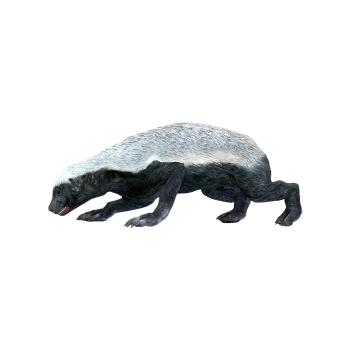
Honey Badger (3D animated model)
194 View
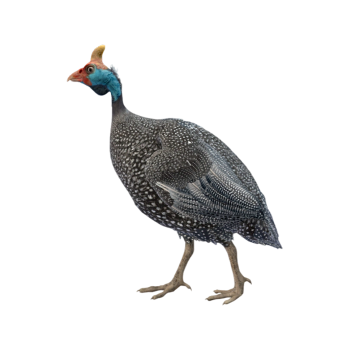
Guinea fowl (3D animated model)
165 View
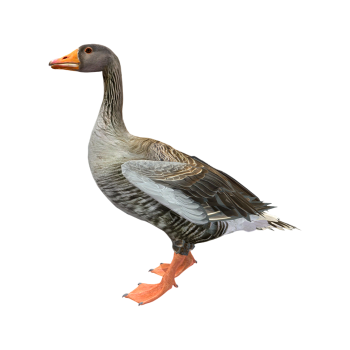
Wild Goose (3D animated model)
187 View
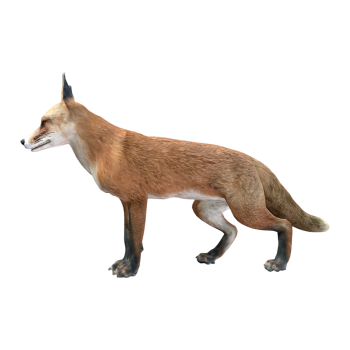
Red Fox (3D animated model)
155 View
Random Model

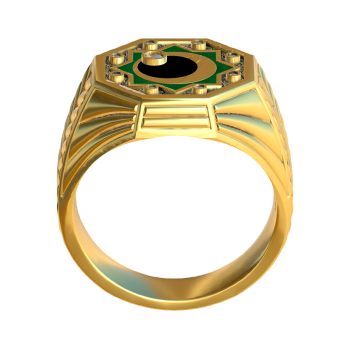
Star Moon Gold Ring
785 View

San Lorenzo Gate, Laredo, Spain
798 View

Baringer Crater
860 View


Dog shaped ceramic container
772 View

Embraer Phenom 300
786 View

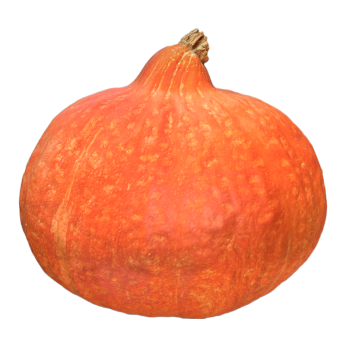
Hokkaido Pumpkin 3D Model
840 View